
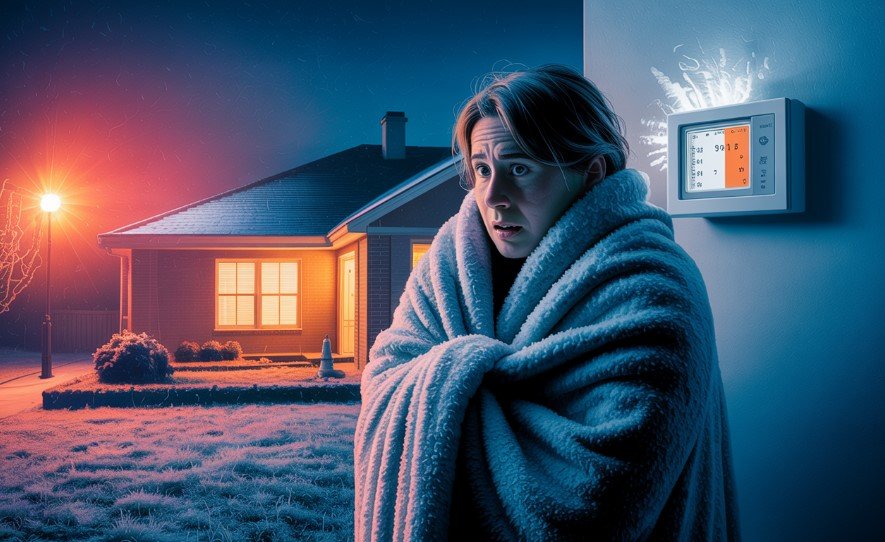

Winter in Richmond doesn’t play around. Sure, we’re known for our brutal summers, but when a cold front pushes through in January or February, temperatures can drop fast. And that’s exactly when you find out whether your furnace is ready to do its job or if it’s about to leave you in the cold.
Most furnace failures don’t happen without warning. Your system will usually give you signs that something’s wrong before it completely quits. The problem is, a lot of homeowners don’t know what to look for until it’s too late and they’re bundled up in blankets waiting for an emergency repair call.
Let me walk you through the warning signs that mean your furnace needs attention now, before the next cold snap hits.
Strange Noises That Weren’t There Before
Your furnace shouldn’t sound like it’s auditioning for a horror movie. If you’re hearing banging, scraping, squealing, or rattling sounds coming from your heating system, something’s wrong.
A banging noise often means there’s a problem with the ignition. Gas builds up before igniting, which creates a small explosion inside the combustion chamber. That’s not just annoying. It’s dangerous and needs immediate attention.
Squealing or screeching usually points to a blower motor issue. The bearings might be worn out, or the belt could be slipping. Left alone, that blower motor will eventually seize up completely.
Rattling sounds can mean loose panels or ductwork, but they can also indicate a cracked heat exchanger, which is a serious safety issue. A cracked heat exchanger can leak carbon monoxide into your home.
Bottom line, if your furnace is making noises it didn’t make last winter, don’t ignore it. Those sounds are your system telling you it needs help. Getting furnace repair in Richmond TX before a minor issue becomes a major breakdown will save you money and keep your family safe.
Your Energy Bills Are Climbing for No Reason
Take a look at your heating bills from last winter and compare them to what you’re paying now. If your usage hasn’t changed but your bills have jumped significantly, your furnace is working harder than it should to keep your home warm.
This happens when parts start wearing out. A failing blower motor, a dirty burner, a clogged filter, or ductwork leaks can all force your system to run longer cycles to maintain temperature. You’re paying for all that extra runtime, and your furnace is aging faster because of the strain.
Sometimes the issue is simple. A dirty filter can restrict airflow enough to make your system work overtime. But if you’ve changed the filter and bills are still high, you need a professional to diagnose what’s going on.
Catching efficiency problems early means you’re not throwing money away every month. And it means your furnace has a better chance of making it through the rest of the season without a complete breakdown.
Weak or Inconsistent Heat Throughout Your Home
If you’re cranking the thermostat up but still feeling cold, or if some rooms are warm while others are freezing, your furnace isn’t distributing heat properly.
This can happen for several reasons. Your blower motor might not be pushing air through the ducts with enough force. You could have ductwork issues like leaks or blockages. Your thermostat might be failing and giving your furnace bad information.
Or it could be that your heat exchanger is cracked and your furnace is shutting down as a safety measure before it reaches full temperature.
Whatever the cause, weak or uneven heating means your system isn’t doing its job. And if a Richmond cold snap hits and temperatures drop into the 20s overnight, a struggling furnace might not keep up at all.
Don’t wait until you’re waking up to a 55 degree house. If your heating feels off, call for gas furnace repair in Richmond before the problem gets worse.
The Furnace Is Cycling On and Off Constantly
A healthy furnace runs in fairly predictable cycles. It kicks on, heats your home to the set temperature, and shuts off. Then it waits until the temperature drops again before starting another cycle.
If your furnace is turning on and off every few minutes, something’s wrong. This is called short cycling, and it’s hard on your equipment. It wastes energy, drives up your bills, and puts unnecessary wear on components that aren’t designed to start and stop constantly.
Short cycling can be caused by a bad thermostat, a clogged filter, an oversized furnace, or problems with the flame sensor. It can also indicate a more serious issue like a failing control board or a cracked heat exchanger.
Whatever the cause, short cycling needs to be addressed. Every unnecessary start cycle is adding stress to your system and shortening its lifespan.
Yellow or Flickering Burner Flame
If you can see your furnace’s burner flame, take a look at it. A healthy gas furnace flame should be blue and steady. If the flame is yellow, orange, or flickering, that’s a serious warning sign.
A yellow flame means your furnace isn’t burning gas efficiently. It could indicate a dirty burner, improper air mixture, or a ventilation problem. And here’s the scary part. Incomplete combustion produces carbon monoxide, an odorless and deadly gas.
If you see a yellow or flickering flame, don’t mess around. Turn off your furnace and call for professional help immediately. This isn’t something you wait on or try to fix yourself.
Carbon monoxide poisoning is no joke. Symptoms include headaches, dizziness, nausea, and confusion. In severe cases, it can be fatal. A yellow burner flame is your furnace telling you there’s a safety issue that needs immediate attention.
Frequent Thermostat Adjustments to Stay Comfortable
Are you constantly walking over to the thermostat to bump it up a few degrees? If you find yourself adjusting the temperature more often than usual just to stay comfortable, your furnace isn’t maintaining consistent heat.
This could mean your thermostat is failing and not reading temperatures correctly. Or it could mean your furnace is struggling to reach the set temperature because of underlying mechanical issues.
Either way, you shouldn’t have to babysit your thermostat. If it’s set to 72 degrees, your home should stay at 72 degrees without constant intervention.
A properly functioning system maintains temperature automatically. When that stops happening, it’s time to call in a professional to figure out why.
Visible Rust or Corrosion on the Furnace
Take a quick look at your furnace itself. Do you see rust, corrosion, or signs of moisture around the unit? These are red flags that shouldn’t be ignored.
Rust on the outside of your furnace can indicate humidity problems or a leak somewhere in the system. Moisture around the base might mean your condensate drain is clogged or your heat exchanger is compromised.
Corrosion weakens metal components and can lead to cracks or failures in critical parts. And if moisture is getting where it shouldn’t be, you’re looking at potential mold growth and ongoing damage that will only get worse.
If your furnace looks rough on the outside, there’s a good chance things aren’t great on the inside either. A professional inspection can tell you how serious the problem is and what needs to be done.
The Furnace Is Over 15 Years Old
Age matters when it comes to heating systems. Most furnaces are built to last about 15 to 20 years with proper maintenance. Once your system hits that age range, failures become more likely even if you’ve taken good care of it.
Older furnaces run less efficiently than newer models. They cost more to operate, and finding replacement parts can be difficult. And because they’ve been through countless heating cycles, worn components are more likely to fail.
If your furnace is getting up there in years and you’re starting to see warning signs, it might be time to have an honest conversation with a technician about whether repair or replacement makes more sense.
Sometimes sinking money into an old system just delays the inevitable. Other times, a good repair can buy you another few years. A qualified HVAC professional can help you make the right call for your situation and budget.
Don’t Wait Until You’re Freezing
Richmond winters might not last as long as they do up north, but when it gets cold here, it gets cold fast. And there’s nothing worse than waking up to a broken furnace on a 30 degree morning.
Most furnace failures are preventable if you catch the warning signs early. Strange noises, high bills, weak heat, short cycling, yellow flames, constant thermostat adjustments, visible corrosion, or an aging system are all telling you the same thing. Your furnace needs attention.
If you’re seeing any of these signs, don’t put it off. Contact the team at Temper Mechanical Air & Heat LLC for reliable furnace repair in Richmond TX. We’ll diagnose the problem, explain your options, and get your heating system back to working the way it should.
Because the best time to fix your furnace is before it leaves you in the cold.
