

Introduction
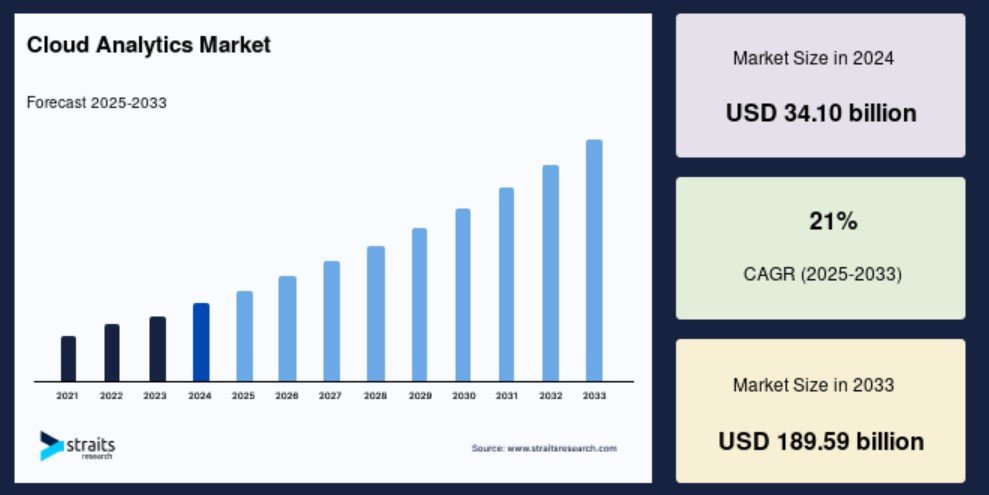
Data analytics has moved decisively to the cloud. As organisations deal with growing data volumes, traditional on-premise systems are proving expensive and difficult to scale. Cloud analytics platforms address these challenges by offering flexible storage, powerful processing, and pay-as-you-go pricing. Among the many tools available today, Snowflake and Google BigQuery stand out as two of the most widely adopted cloud data warehouses.
For beginners entering analytics, understanding these platforms is no longer optional. Many entry-level roles now expect familiarity with cloud-based data environments. This article explains why cloud analytics is growing, how Snowflake and BigQuery work at a foundational level, and how beginners can start building practical skills in this space.
Why Cloud Analytics Is Replacing Traditional Data Warehouses
Traditional data warehouses were designed for predictable workloads and limited data sources. Modern businesses, however, generate data from applications, sensors, customer interactions, and third-party platforms. Managing this variety requires systems that can scale quickly without heavy infrastructure investments.
Cloud analytics platforms solve this by separating storage and compute. This allows users to store large datasets cheaply and process them only when needed. They also reduce maintenance overhead, as updates, security patches, and performance optimisations are handled by the provider.
Accessibility is another key advantage. Teams in different locations can securely access the same data environment, supporting faster collaboration and decision-making. For beginners, this reduces technical barriers and increases opportunities to work with real-world data.
Understanding Snowflake: Core Concepts for Beginners
Snowflake is a cloud-native data warehouse built specifically for analytics. It runs on major cloud providers and is known for its simplicity and performance.
One of Snowflake’s defining features is its architecture. Storage, compute, and services are fully independent. This allows multiple users to run queries simultaneously without affecting each other’s performance. For beginners, this removes the need to manage complex resource conflicts.
Snowflake primarily uses SQL, making it approachable for those with basic database knowledge. Data can be loaded from various sources, including CSV files, cloud storage, and streaming systems. Once loaded, users can query data, build views, and support reporting tools with minimal configuration.
From a learning perspective, Snowflake is well suited for understanding modern analytics workflows. Concepts such as data sharing, role-based access, and cost control are central to how enterprises operate today.
Getting Started with Google BigQuery
Google BigQuery is a fully managed, serverless analytics platform within Google Cloud. Unlike traditional databases, BigQuery does not require users to provision servers or manage capacity. Queries run directly against massive datasets using Google’s distributed infrastructure.
BigQuery uses standard SQL, with extensions designed for large-scale analytics. It is particularly strong in handling very large datasets and complex analytical queries. Beginners often appreciate its web-based interface, which allows them to run queries and visualise results quickly.
A notable feature of BigQuery is its integration with other Google services. Data can flow easily from Google Analytics, cloud storage, and machine learning tools. This makes it a practical choice for learning end-to-end analytics pipelines, from raw data to insights.
How Beginners Can Build Cloud Analytics Skills
Learning cloud analytics requires a mix of conceptual understanding and hands-on practice. Beginners should start by strengthening SQL fundamentals, as both Snowflake and BigQuery rely heavily on query-based analysis. Understanding joins, aggregations, and window functions is essential.
Next, practical exposure is key. Working with sample datasets, building simple dashboards, and experimenting with query optimisation helps translate theory into usable skills. Many learners choose structured learning paths, such as a data analysis course in Pune, to gain guided exposure to cloud tools alongside core analytics concepts.
Equally important is understanding cost awareness. Cloud platforms charge based on usage, so beginners should learn how query design and data storage choices affect costs. This knowledge is valued by employers and demonstrates real-world readiness.
Finally, combining cloud analytics with basic data visualisation and reporting skills completes the learning loop. Employers increasingly expect analysts to move seamlessly from raw data to business insights.
Career Relevance of Cloud Analytics Tools
Snowflake and BigQuery skills are now frequently mentioned in job descriptions for junior and mid-level analytics roles. Companies adopting cloud-first strategies prefer candidates who can work within these environments from day one.
For those preparing for entry-level roles, aligning learning with industry expectations is crucial. A well-designed data analyst course that includes cloud analytics exposure can help bridge the gap between academic knowledge and professional requirements.
Conclusion
Cloud analytics has become a core component of modern data work, and platforms like Snowflake and Google BigQuery are leading this shift. For beginners, mastering these tools starts with understanding their architecture, building strong SQL skills, and gaining hands-on practice with real datasets. As organisations continue to migrate analytics workloads to the cloud, early familiarity with these platforms can significantly improve career readiness and long-term growth in the data analytics field.
Business Name: ExcelR – Data Science, Data Analyst Course Training
Address: 1st Floor, East Court Phoenix Market City, F-02, Clover Park, Viman Nagar, Pune, Maharashtra 411014
Phone Number: 096997 53213
Email Id: enquiry@excelr.com
